


ICF Level 1 Explained: Your First Step to Becoming a Coach in Australia
If you’ve started looking into how to become a coach, you’ve probably run headfirst into a wall of jargon: ICF, Level 1, Level 2, ACC, PCC, ACSTH and more.
ICF Level 1 is where most new coaches begin, and understanding it is the difference between choosing a course with confidence and crossing your fingers and hoping. At the Institute of Applied Psychology (IAP), we’ve helped guide many students through this exact decision.
We’ll help walk you through what ICF Level 1 actually is, how it’s different from the credentials people confuse it with, what a Level 1 course involves, how it compares to Level 2, and exactly how it leads to your first coaching credential. There’s a checklist near the end you can use before you enrol, too.
Key takeaways: ICF Level 1 in a nutshell
- ICF Level 1 is a type of coach training, not a credential. It’s the beginner-friendly pathway that leads to your first ICF credential, the ACC.
- It builds a genuine foundation. A Level 1 program means at least 60 hours of coach-specific training, live practice, observed sessions and 10 hours of mentor coaching.
- Levels are about depth; credentials are about you. Levels 1, 2 and 3 describe the training; ACC, PCC and MCC are what the ICF awards the coach.
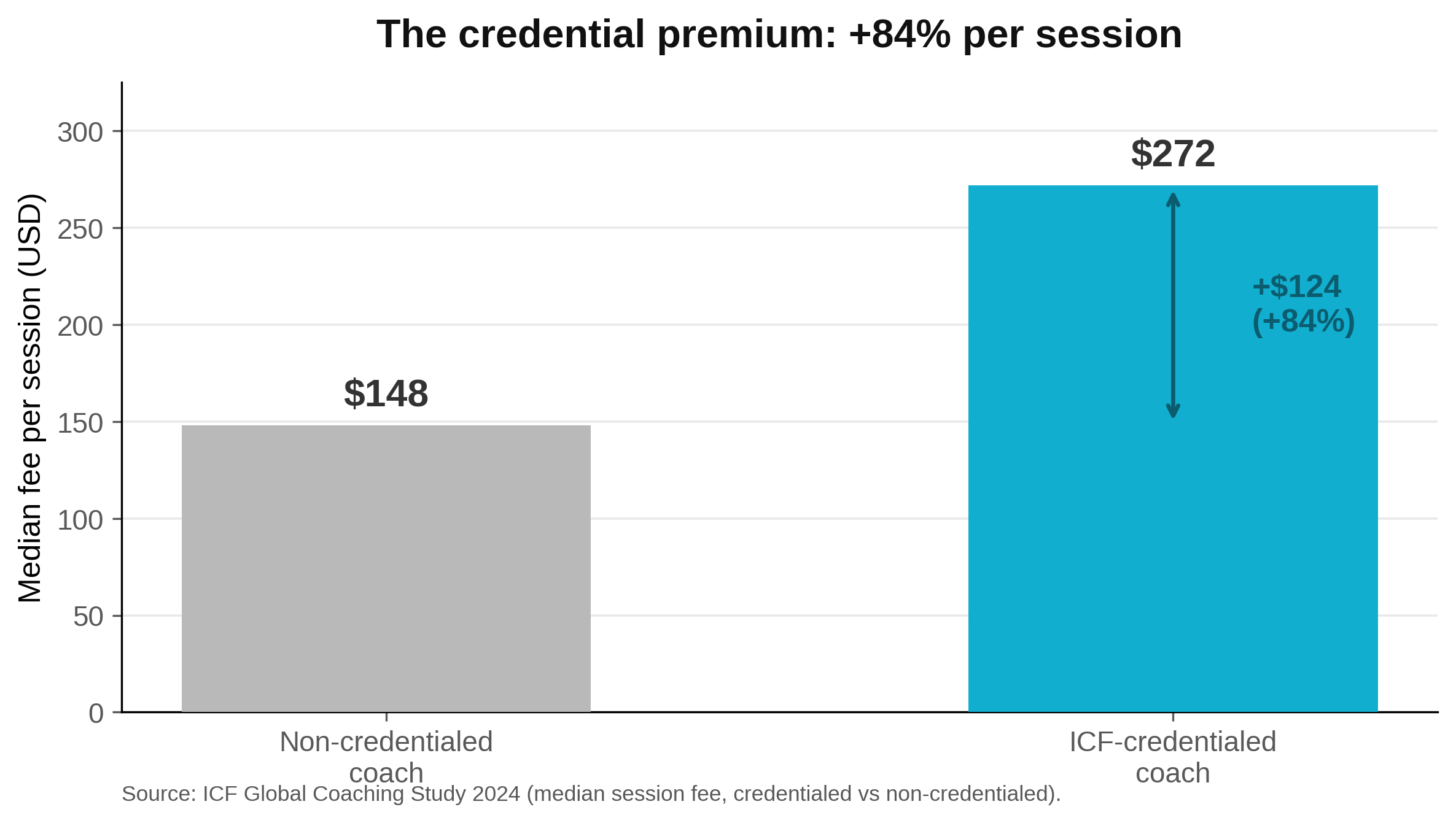
- It’s worth it in a market that rewards credentials. Credentialed coaches could charge a median 84% more per session than non-credentialed ones ($272 vs $148, ICF 2024).
- Accreditation is the word that matters. “ICF-aligned” or “based on ICF standards” is not the same as an accredited Level 1 program, so always check.
What is ICF Level 1?
ICF Level 1 is an accreditation given by the International Coaching Federation (ICF) to entry-level coach training programs, the courses designed to take a complete beginner to their first professional credential. A Level 1 program covers the ICF’s core competencies and ethics, includes live practice and mentor coaching, and prepares you to apply for the Associate Certified Coach (ACC) credential.
In plain English: if you’re starting from scratch and want a recognised, professional grounding in coaching, a Level 1 program is almost always where you begin. The ICF describes Level 1 as building “a strong foundation”, which is exactly what it’s for.
Coaching levels vs credentials
The levels (1, 2 and 3) describe how deep the training goes. The credentials (ACC, PCC and MCC) are what the ICF awards you once you’ve done the training and
A level 1 program leads to the ACC credential, Level 2 leads to the PCC, and Level 3 leads to the MCC.
| Training level | Leads to credential | Who it’s for |
| Level 1 | ACC (Associate Certified Coach) | New coaches building a foundation |
| Level 2 | PCC (Professional Certified Coach) | Established coaches going deeper |
| Level 3 | MCC (Master Certified Coach) | Advanced, master-level practitioners |
What does an ICF Level 1 course involve?
A genuine Level 1 program isn’t a weekend of slides and a certificate. To be accredited, it has to include a real set of competencies, and knowing them helps you tell a proper course from a pretender:
- At least 60 hours of coach-specific training, including live (synchronous) learning rather than purely self-paced video.
- Supervised, observed practice, typically the observation and written feedback of around five of your coaching sessions.
- 10 hours of mentor coaching over a minimum of three months, so your skills are shaped as they develop.
- A performance evaluation, where a recorded session is assessed against the ICF’s competencies.
Get through all of that and you’ve done far more than “learn about” coaching. You’ve been assessed actually doing it, and that’s why the credential carries weight.
ICF Level 1 vs Level 2
Most people starting out should choose Level 1, because it’s built for exactly that. Choose Level 2 only if you’re already an experienced coach aiming straight for the PCC credential and the deeper training that goes with it. A common mistake is picking Level 2 just because it sounds more advanced; the better question is which credential you’re actually working towards. Here’s the side-by-side:
| ICF Level 1 | ICF Level 2 | |
| Leads to | ACC credential | PCC credential |
| Training hours | 60+ hours | 125+ hours |
| Best for | New and aspiring coaches | Experienced coaches going deeper |
| Focus | A solid professional foundation | Advanced competency and mastery |
Level 1 is typically the right starting point for most people building a career.
How ICF Level 1 leads to becoming a certified coach
Completing a Level 1 program is step one of four on the way to your first credential. Once your training is done, you build real coaching hours, sit the ACC exam and apply.
Here’s the whole path at a glance:
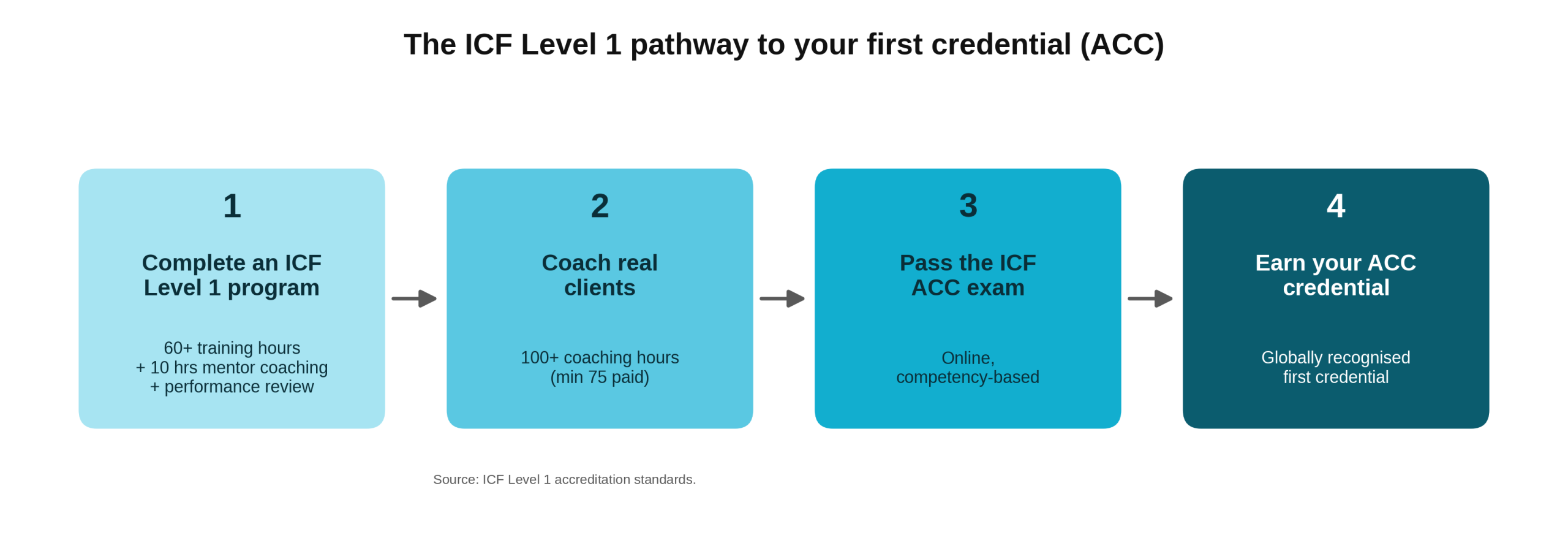
The Level 1 pathway streamlines your ACC application; your accredited training does most of the heavy lifting.
That middle step, the coaching hours, is the one people underestimate, so start early. Coaching friends, colleagues or pro bono clients all count towards building the experience (and the confidence) you need.
Is ICF Level 1 worth it?
For anyone serious about coaching as a career, yes. Australia’s coaching industry is unregulated, which means anyone can call themselves a coach, so clients and employers lean on credentials to tell the professionals apart. The pay gap makes the case on its own: ICF-credentialed coaches typically charge a median 84% more per session than non-credentialed coaches.
There’s demand to grow into, as well. The 2025 ICF Global Coaching Study counted 122,974 coaches worldwide and US$5.34 billion in revenue, with 85% of clients saying they value a credentialed coach and 73% of coaches reporting that clients now expect one. A Level 1 program is how you get on that map.
Before you enrol: your ICF Level 1 course checklist
Not all courses are equal, and the same credential can cost wildly different amounts depending on the provider. Run any course past this quick checklist before you commit:
| Tick each box before you enrol
☐ It clearly states it’s an ICF-accredited Level 1 program (not just “ICF-aligned”). ☐ There’s live sessions included, not only self-paced videos. ☐ A performance evaluation of a recorded session is part of the course. ☐ The pricing is transparent and all-in, with no surprise exam or assessment costs. ☐ You can speak to the facilitator during or to recent graduates about their results. |
Ready to build your coaching foundation?
| IAP’s Certificate of Professional Coaching helps give you a genuinely strong start: more than 60 contact learning hours, ICF-aligned coaching skills, mentor coaching and a performance evaluation, all fulfilling the education requirement for the ICF ACC (Level 1) application pathway. You’ll finish with both the skills to coach and a clear route to your first credential.
IAP’s Certificate of Professional Coaching is built to be exactly that. |
Frequently asked questions
What is ICF Level 1?
Is ICF Level 1 the same as the ACC credential?
Should I do ICF Level 1 or Level 2 first?
How long does ICF Level 1 take?
Do I need ICF Level 1 to be a coach in Australia?
Sources: ICF Level 1 accreditation standards (coachingfederation.org); ICF Global Coaching Study 2025 and 2024 rate data; IAP Diploma of NLP & Professional Coaching (iap.edu.au). Session-fee figures are global USD medians and indicative; verify Australian figures against the latest ICF Australasia data before publishing.