


Could Counselling Be Your Next Career? An Australian Guide for Career Changers
Key Takeaways
If you’re considering becoming a counsellor in Australia, here are some of the most important things to know:
- Counselling is increasingly attracting mature-age students, career changers, parents returning to work, teachers, nurses, HR professionals, business owners and corporate professionals.
- Many counselling students begin studying in their 40s, 50s and beyond.
- Counsellors help people navigate challenges including anxiety, stress, relationships, grief, confidence, life transitions and emotional wellbeing.
- Counselling differs from psychology and social work in both training pathways and professional focus.
- Demand for mental health and wellbeing support continues to grow across Australia.
- Counsellors may work in private practice, schools, community services, disability support, EAP programs, family services and telehealth settings.
- Life experience is often one of the greatest strengths mature-age counsellors bring to the profession.
- Flexible online learning has made career transitions more accessible than ever before.
Why Are So Many Australians Considering Counselling?
Across Australia, more people are questioning whether their current work is truly aligned with the life they want to create.
For some, it is burnout.
For others, it is the growing feeling that their work no longer feels meaningful.
Many people reach a point where they want their career to contribute to something larger than targets, deadlines, meetings and performance reviews.
At the same time, conversations around mental health, emotional wellbeing and personal development have become far more mainstream than they were even a decade ago.
Increasingly, Australians are becoming more aware of the importance of emotional support, connection, resilience and mental wellbeing.
For many career changers, counselling represents a profession that combines purpose, flexibility, lifelong learning and the opportunity to genuinely help others.
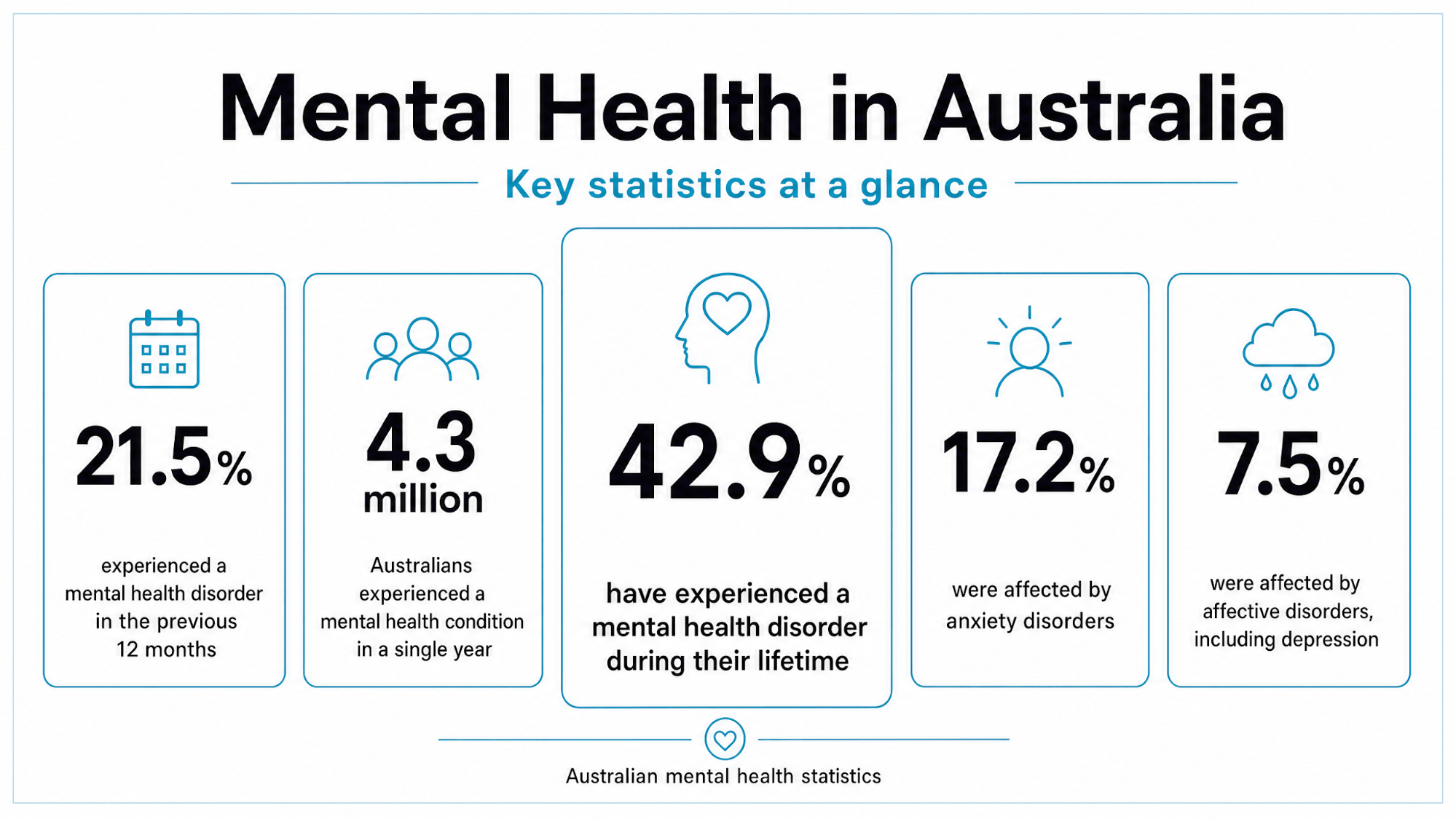
Mental Health in Australia
According to the Australian Bureau of Statistics National Study of Mental Health and Wellbeing:
Is Counselling a Good Career in Australia?
The answer depends on what you want from your future.
If your primary goal is maximising income above everything else, there may be other professions that better align with that objective.
However, if you are seeking:
- Meaningful work
- Human connection
- Career flexibility
- Potential private practice opportunities
- Long-term relevance
- Personal growth
- Ongoing learning
Counselling can be an incredibly rewarding profession.
One reason counselling continues attracting career changers is that many of the profession’s core skills remain deeply human.
While technology and artificial intelligence continue transforming workplaces globally, qualities such as empathy, trust, emotional intelligence, active listening and therapeutic rapport remain highly valued human capabilities.
Australia’s Need for Mental Health Support Continues to Grow
The Australian Institute of Health and Welfare reports that mental health remains one of Australia’s most significant health concerns.
Millions of Australians access mental health services each year, while demand continues growing across community services, private practice, schools, telehealth services and workplace wellbeing programs.
This growing demand is one reason many people are now exploring helping professions and wellbeing-focused careers.
What Does a Counsellor Actually Do?
One of the biggest misconceptions about counselling is that counsellors simply tell people what to do.
In reality, counselling is far more nuanced.
Professional counsellors help clients:
- Explore thoughts and emotions
- Understand behavioural patterns
- Improve self-awareness
- Develop healthier coping strategies
- Navigate difficult life situations
- Improve relationships
- Build resilience
- Increase confidence
- Create meaningful change
A counsellor’s role is not to “fix” people.
Instead, counsellors help clients better understand themselves, gain clarity and move forward more effectively.
Who Typically Becomes a Counsellor?
Many people assume counsellors begin their careers straight after school.
The reality is often very different.
Many counselling students come from backgrounds including:
- Teaching
- Nursing
- Human Resources
- Administration
- Sales
- Business
- Leadership
- Healthcare
- Disability Support
- Community Services
Many have spent years, or even decades, in completely different professions.
What they often share is a growing desire to work more directly with people and make a meaningful difference.
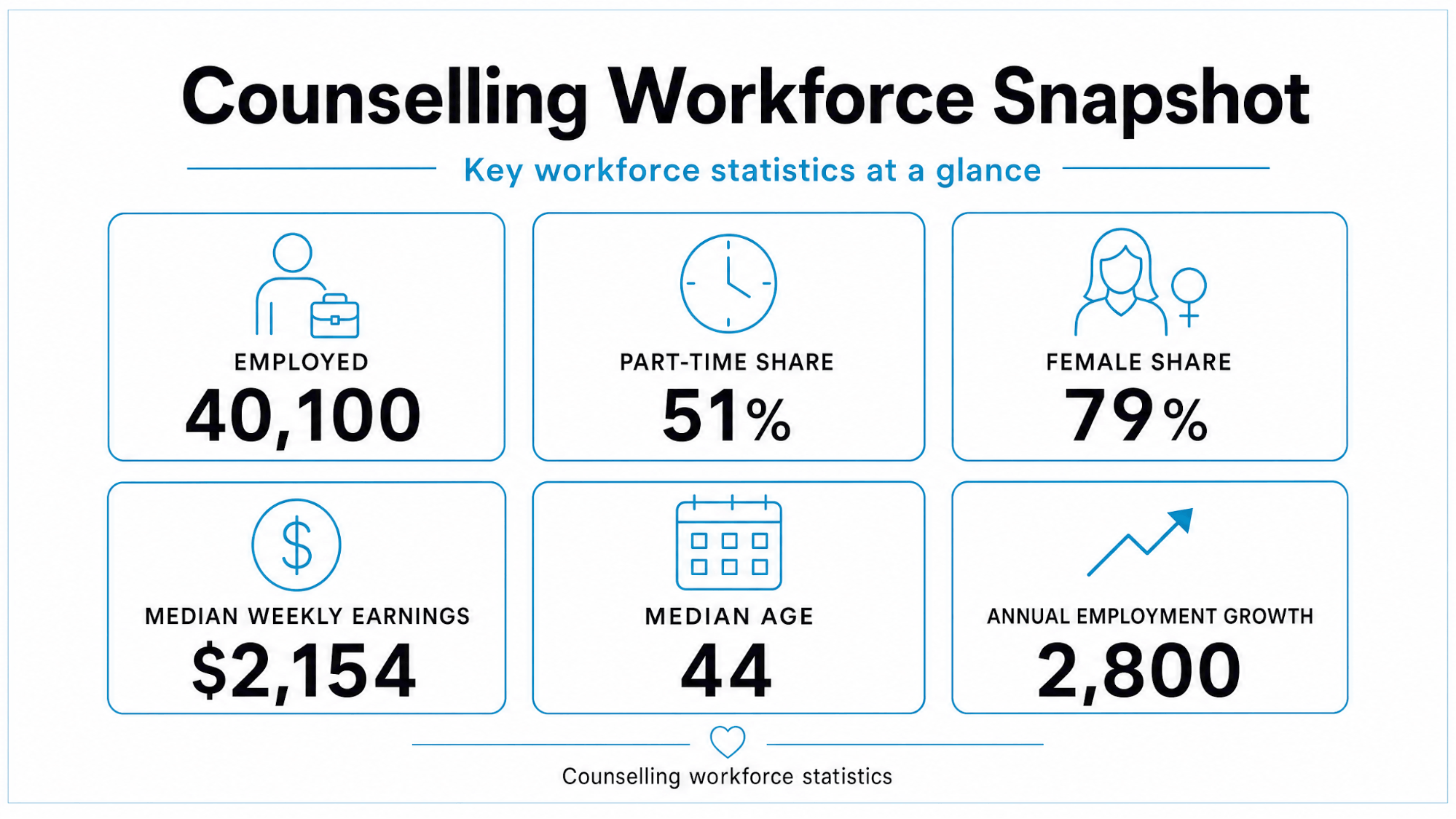
Counselling Workforce Snapshot
According to Jobs and Skills Australia
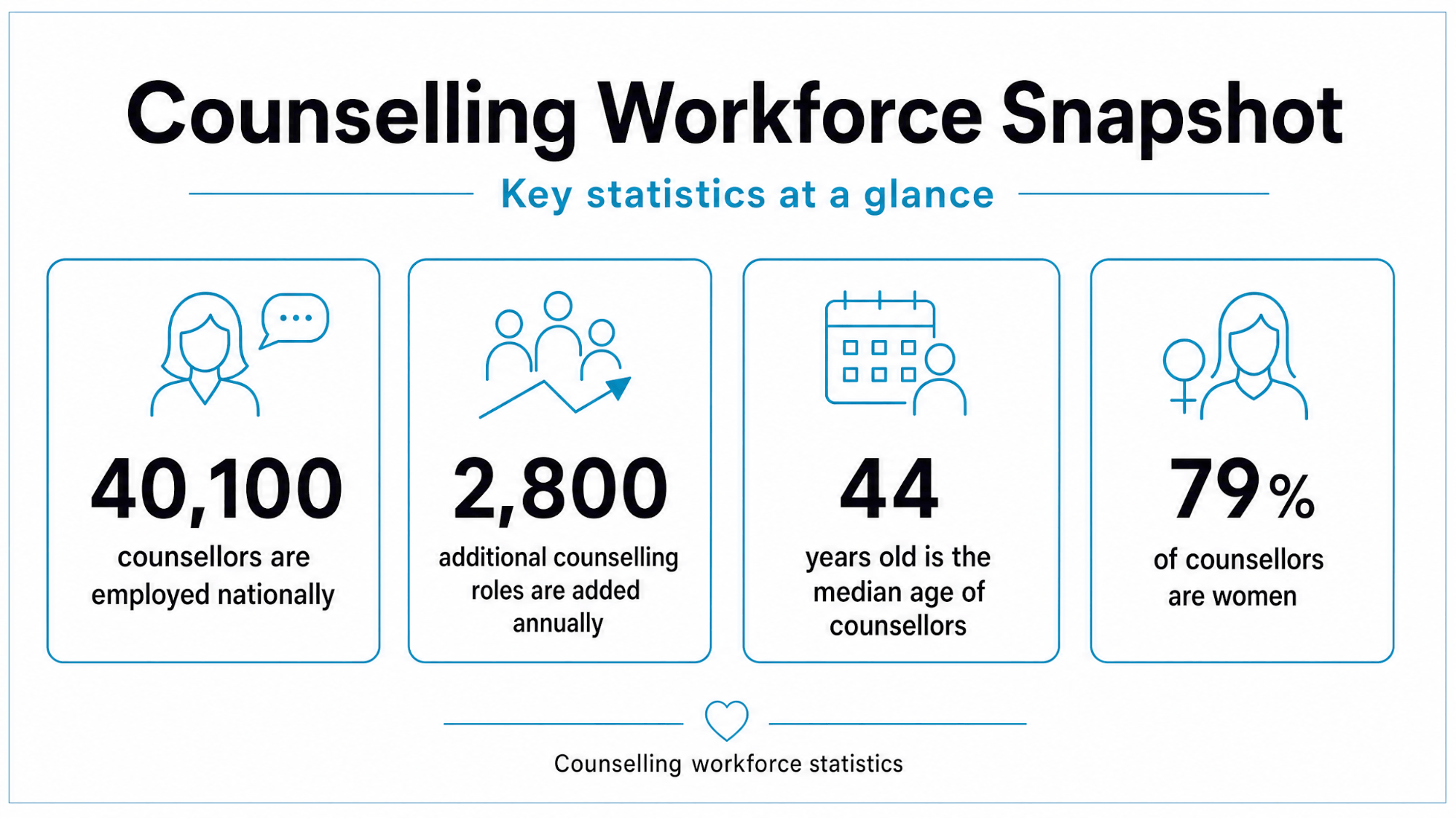
These statistics highlight something important.
Counselling is already a profession filled with mature-age professionals and career changers.
Am I Too Old to Become a Counsellor?
This is one of the most common questions prospective students ask.
The short answer is no.
Many people begin counselling studies in their 30s, 40s, 50s and beyond.
In fact, life experience often becomes one of the greatest strengths a counsellor can bring to their work.
Years spent:
- Raising families
- Building careers
- Navigating relationships
- Managing challenges
- Understanding people
can all contribute valuable perspective.
Many clients actively seek counsellors with significant life experience because they feel understood by someone who has navigated real-world challenges themselves
Age can be an advantage.
According to Jobs and Skills Australia, the median age of counsellors in Australia is 44 years old.
Counsellor vs Psychologist vs Social Worker
One of the biggest areas of confusion for prospective students is understanding the difference between these professions.
Counsellor
Counsellors typically help clients navigate:
- Emotional challenges
- Relationships
- Life transitions
- Stress
- Anxiety
- Personal development
Pathways may include diploma, bachelor and postgraduate qualifications. However the CHC51015 Diploma of Counselling is typically a great foundation for starting your career in counselling in employment or your private practice.
Psychologist
Psychologists typically focus on:
- Psychological assessment
- Diagnosis
- Treatment planning
- Evidence-based interventions
Psychology requires university-based pathways and registration requirements.
Social Worker
Social workers commonly work within:
- Community services
- Advocacy
- Case management
- Government services
- Social systems support
Social work generally requires university qualifications.
Each profession plays an important role.
For many career changers, counselling often provides one of the most accessible pathways into the helping professions.
What Skills Make a Great Counsellor?
Many people imagine counsellors as naturally extroverted people who always know the right thing to say.
The reality is often very different.
Strong counsellors frequently possess:
- Empathy
- Curiosity
- Emotional intelligence
- Active listening
- Patience
- Self-awareness
- Professional boundaries
- Non-judgement
- Communication skills
- Genuine care for people
Many of these skills can be developed through quality training, practice and experience.
Where Can Counsellors Work?
Many people are surprised by the diversity of counselling career pathways.
Counsellors may work within:
Private Practice
Supporting clients directly.
Schools
Working with students and families. (different regulations for state v private schools per state could apply)
Community Services
Supporting individuals and groups.
Disability Services
Supporting wellbeing and adjustment.
Youth Services
Helping young people navigate challenges.
Employee Assistance Programs
Supporting workplace wellbeing.
Family Services
Working with parents, couples and families.
Telehealth Services
Providing counselling online across Australia.
Many counsellors eventually combine multiple pathways.
Private Practice Is More Common Than Many People Realise
According to the Australian Counselling Association Workforce Census:
- 36% of counsellors reported being self-employed.
- 31% worked primarily in salaried positions.
- 19% combined employment with private practice.
This highlights the flexibility that can exist within counselling careers.
What Can Counsellors Earn?
Income varies significantly depending on:
- Experience
- Industry
- Specialisation
- Location
- Private practice involvement
- Client load
Many employed counsellors earn salaries comparable to other helping professions.
Private practitioners may create additional flexibility and income opportunities over time.
Salary Snapshot For Counsellors
Industry salary data suggests counsellors commonly earn between approximately $95,000 and $115,000 annually depending on experience, industry and role. In private practice, counsellors typically charge $150+ per hour.
It is important to remember that many people choose counselling not only for income, but for purpose, flexibility and meaningful work.
How Long Does It Take to Become a Counsellor?
The answer depends on your chosen pathway.
Some people begin with vocational qualifications and can gain the diploma qualification in 12 to 24 months.
Others pursue university pathways.
The right option depends on:
- Career goals
- Budget
- Time availability
- Learning preferences
- Long-term aspirations
There is no single pathway that suits everyone.
Can You Become a Counsellor Without a University Degree?
Yes.
This is one of the most asked counselling questions in Australia.
There are multiple pathways into counselling depending on your goals, desired memberships and future plans.
Many successful counsellors begin through vocational education with an ACA-accredited CHC51015 Diploma of Counselling before deciding whether they wish to continue into further study later.
The Pros and Cons of a Counselling Career
Benefits
- Meaningful work
- Human connection
- Lifelong learning
- Career flexibility
- Diverse career pathways
- Potential private practice opportunities
- Personal growth
Challenges
- Emotionally demanding work
- Continuous professional development
- Documentation requirements
- Managing professional boundaries
- Building confidence and experience
Like any profession, counselling requires commitment, ongoing learning and professional responsibility.
Real-Life Career Change Scenarios
Imagine:
A teacher wanting to support students beyond the classroom.
A nurse looking for a less physically demanding helping profession.
An HR professional wanting deeper one-on-one work.
A business owner seeking a more meaningful second career.
A parent returning to the workforce after raising children.
These are all common pathways into counselling.
10 Signs Counselling Could Be the Right Career for You
- People naturally open up to you.
- You enjoy meaningful conversations.
- You are curious about human behaviour.
- You want work that feels purposeful.
- You enjoy helping people grow.
- You value emotional intelligence.
- You enjoy learning.
- You are naturally empathetic.
- You communicate well with different types of people.
- You want your work to make a positive impact.
Before Choosing a Counselling Course
Before enrolling anywhere, consider:
- Is the qualification accredited by The ACA?
- What professional memberships may be available after graduation?
- What practical learning opportunities are included?
- What student support exists?
- Is the delivery flexible?
- What pathways exist after graduation?
- What outcomes do graduates achieve?
The right course should align with your goals, lifestyle and future aspirations.
Frequently Asked Questions
Can I study counselling online?
Yes. Many counselling programs now offer online and blended learning options.
Can I work while studying?
Most mature-age students continue working while studying.
Do I need previous counselling experience?
No.
Many students begin with no formal counselling experience.
Is counselling emotionally challenging?
It can be at times, which is why professional training, supervision and self-care are important.
Can counselling lead to private practice?
Many counsellors establish private practices, although pathways vary depending on your goals.
One Counselling Statistic Worth Reflecting On
Nearly one in two Australians will experience a mental health disorder during their lifetime.
Behind every statistic is a person.
Someone experiencing anxiety.
Stress.
Grief.
Burnout.
Loss.
A life transition.
Someone looking for support.
For many people considering counselling, this is the moment where the profession becomes more than a qualification.
It becomes an opportunity to contribute meaningfully to the lives of others.
Most people do not wake up one morning and suddenly decide to become a counsellor.
The decision often begins much earlier.
It usually starts with a question.
“What if my work could mean more?”
For some people, counselling becomes the answer.
For others, exploring counselling helps them discover an entirely different path.
Either outcome is valuable.
Because the goal is not simply to find another job.
The goal is to create a future that feels aligned with who you are, what you value and the impact you want to make in the world.
If this sounds like a career change or goal you want to explore, call 1300 915 497 or click here for more information.